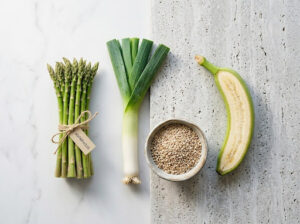
Last time, we talked about feeding the microbes already living in your gut — why fiber comes first and how supporting your existing gut microbiome creates the foundation for better digestion.
That naturally leads to the next question:
Are fermented foods the same as probiotics?
You’ll often see these terms used together, but they are not interchangeable.
Understanding the difference between fermented foods vs probiotics makes it easier to choose the right starting point for your gut health journey.
What Fermented Foods Are Actually Doing
Fermentation is a process, not a product.
During fermentation, microorganisms such as bacteria and yeast break down sugars in foods like cabbage, milk, vegetables, and soybeans.
This process changes the food itself and creates new compounds along the way.
When you eat fermented foods such as yogurt, kefir, sauerkraut, or kimchi, you are getting:
- Live microorganisms created during fermentation
- The original nutrients from the food
- Compounds produced during the fermentation process
For example, when milk becomes kefir or yogurt, bacteria transform components of the milk during fermentation. When cabbage becomes sauerkraut or kimchi, microorganisms produce organic acids that create their unique flavor.
Are Fermented Foods the Same as Probiotics?
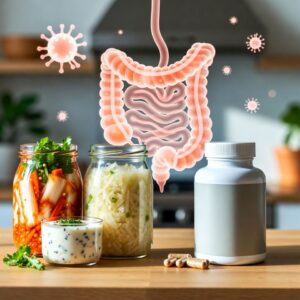
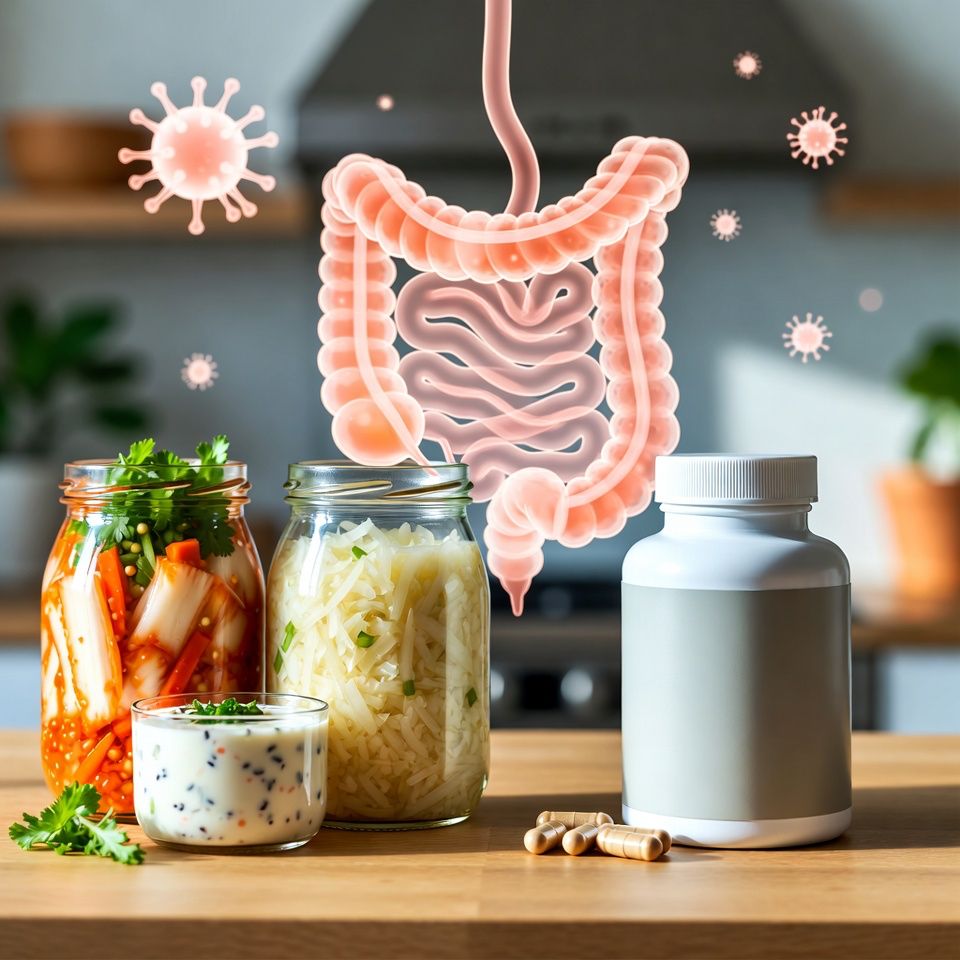
No. Fermented foods contain live microbes along with nutrients and fermentation byproducts, while probiotic supplements contain concentrated, specific strains of bacteria without the surrounding food. Both can support gut health, but they work differently.
Research suggests fermented foods may support microbial diversity and a healthier gut environment in some people. However, they are not a guaranteed solution and work best as part of a broader gut-supportive lifestyle.
Fermented Foods vs Probiotic Supplements: What’s the Difference?
A probiotic supplement is a concentrated source of specific microorganisms.
Unlike fermented foods, supplements are designed around:
- Specific bacterial strains
- Defined amounts of microorganisms
- Targeted uses based on research
Common probiotic strains include:
- Lactobacillus
- Bifidobacterium
- Saccharomyces boulardii
This precision can be helpful in certain situations where a specific strain may be appropriate.
However, probiotic capsules deliver bacteria without the natural food environment that fermented foods provide.
They usually do not contain:
- Fiber to support your existing microbes
- Nutrients from whole foods
- Fermentation compounds created naturally during food preparation
Fermented foods work differently.
The microbes arrive as part of a complete food rather than isolated organisms.
Neither option is automatically better.
They are simply different tools.
Are Fermented Foods Better Than Probiotic Supplements?
For most people, fermented foods are the easier place to start.
They are familiar, easy to include in meals, and naturally provide more than just bacteria.
A strong gut health foundation usually involves several factors working together:
- Eating enough fiber
- Supporting microbial diversity
- Including fermented foods
- Managing stress
- Prioritizing sleep
A probiotic supplement may still be useful, especially when someone has a specific goal or reason for using one.
But introducing probiotics without supporting the environment they enter may not produce the results people expect.
Best Fermented Foods for Gut Health
You do not need fermented foods at every meal.
Starting with a few servings per week is a practical approach.
Yogurt With Live and Active Cultures
Yogurt is one of the simplest fermented foods to add to your routine.
When choosing yogurt, look for:
“Live and active cultures.”
This indicates that beneficial bacteria are present in the finished product.
Greek yogurt can also provide additional protein, making it an easy addition to breakfast or snacks.
Kefir
Kefir is a fermented milk drink containing live cultures.
Compared with many traditional yogurts, kefir often contains a wider variety of microorganisms.
For people comparing kefir vs probiotic supplements, kefir offers a food-based source of live cultures instead of a concentrated capsule.
Sauerkraut
Sauerkraut is fermented cabbage containing naturally occurring beneficial bacteria.
Choose refrigerated versions when possible.
Many shelf-stable varieties are pasteurized, which improves storage but removes the live cultures you are looking for.
A small serving alongside a meal is enough to begin.
Kimchi
Kimchi is a traditional fermented vegetable dish made with ingredients such as cabbage, radish, spices, and fermentation cultures.
It provides both fermented microbes and plant-based nutrients.
Because kimchi can be spicy and strongly flavored, starting with a small amount is usually easier.
How to Start Eating Fermented Foods
Adding fermented foods does not need to become another complicated health project.
A simple approach works best.
Start With One Fermented Food
Choose something you actually enjoy.
Examples:
- Yogurt with breakfast
- Kefir in a smoothie
- Sauerkraut with lunch
- Kimchi with dinner
Introduce It Gradually
Give your body time to adjust.
Everyone’s gut microbiome is different, so your response may not be identical to someone else’s.
Focus on Consistency
A small amount regularly is usually more sustainable than eating large amounts occasionally.
A Simpler Way to Think About Fermented Foods and Probiotics
Fermented foods and probiotic supplements are not competitors.
They are two different approaches to supporting your gut microbiome.
Fermented foods provide:
- Live microorganisms
- Nutrients
- Fermentation byproducts
Probiotic supplements provide:
- Specific strains
- Controlled amounts
- Targeted delivery
For most beginners, fermented foods are the more natural starting point because they fit into everyday eating habits.
Supplements can have a role too, especially when there is a clear reason to use them.
The key is understanding which tool you are using and why.
Start Adding Fermented Foods to Your Routine
If you want a simple way to start eating fermented foods without guessing, I created a Fermented Foods Starter Guide.
Inside, you’ll learn:
- Which fermented foods are easiest for beginners
- What to look for on labels
- How much is enough to start
- Simple ways to add fermented foods into your week
Get the free Fermented Foods Starter Guide here:
Want to Go Beyond Fermented Foods?
Fermented foods are only one piece of the bigger gut health picture.
Long-term gut health requires a complete system that includes food choices, fiber intake, lifestyle habits, stress management, and sleep.
That is what Gut Health Beyond Basics is designed to help you understand — a practical, step-by-step approach to building sustainable gut health habits rather than relying on quick fixes. (Reid Ashford, Author)
See What’s Inside the Course →
What Comes Next?
In the next article, we’ll look directly at probiotic supplements:
Why they often do not work the way people expect, what makes certain strains different, and what needs to be in place before probiotics can actually support your gut.
Because the environment matters just as much as the microbes you introduce.
Talk soon,
—Reid