
You’ve probably heard that inflammation is bad for your gut. You may have heard the phrase “leaky gut” too — tossed around everywhere from wellness blogs to doctors’ offices, usually with very different levels of confidence attached to it.
It can be hard to know what to take seriously.
The gut barrier is real. Gut-based inflammation is real. And the connection between the two matters more than most people realize — not because it’s dramatic, but because it shapes how your gut functions on a daily basis.
This guide will help you understand what the gut barrier actually is, what disrupts it, what gut inflammation really means, and — most importantly — what you can do about it in practical, everyday terms.


Your digestive tract is essentially a long tube running through your body. And lining that tube — from one end to the other — is a single layer of cells called the intestinal epithelium (pronounced “ep-ih-THEE-lee-um” — simply the surface cells that form the gut wall).
That’s the gut barrier. One cell thick. Roughly the surface area of a tennis court if you could unfold it.
Its job is to do two things at once: let the good stuff in and keep everything else out. Nutrients, water, and useful compounds get absorbed. Bacteria, toxins, undigested food particles, and waste products are meant to stay on the other side.
The cells in this lining are held together by structures called tight junctions — think of them as the mortar between the bricks. When tight junctions are working well, the barrier is selective and strong. When they loosen, the barrier becomes more permeable than it should be.
That is what people mean by a “leaky” gut. Not a dramatic collapse — a shift in how tightly those junctions hold.
Inflammation is not inherently a problem. It is your immune system doing its job — responding to a perceived threat, attempting to contain and resolve it, then standing down.
Acute inflammation — short-term, targeted, and resolving — is healthy and necessary. You get a cut. Inflammation helps it heal. That is the process working as intended.
The version that creates problems is chronic, low-grade inflammation — a state where the immune system stays in a mild but persistent state of alert. Not a dramatic flare. More like a smoke alarm that won’t quite turn off.
In the gut, this kind of sustained inflammation can wear on the lining, disrupt the microbial balance, impair digestion, and over time, contribute to a range of issues that go well beyond digestive discomfort.
And here is what makes it particularly tricky: low-grade gut inflammation often doesn’t announce itself loudly. It can live under the surface — showing up as fatigue, brain fog, sluggish digestion, or a general sense of not feeling quite right.
Stress does not stay in the mind. It changes the chemistry of the body, including the gut. One of the hormones involved, CRH, can weaken the tiny seals between the cells of the intestinal lining when the stress response remains active for too long.
Those seals help decide what is allowed to pass from the gut into the body. When they become less selective, bacterial fragments may slip through and trigger a quiet, ongoing immune response. That can contribute to inflammation and a more sensitive gut. It is the same gut-barrier pattern discussed in the Gut Barrier & Inflammation pillar—and one reason chronic stress deserves a real place in a gut-health plan.
The gut microbiome is affected by the body’s stress response. When stress continues for a long time, the community of bacteria in the gut can become less diverse, with fewer helpful strains and more room for less helpful ones to grow.
That shift can mean less butyrate—the compound that helps nourish the cells of the gut lining—and changes in other chemical messengers involved in mood and calm, including serotonin and GABA. It may also make the gut environment more inflammatory.
In that way, stress can disturb the microbiome, and an unsettled microbiome can make the body more sensitive to stress. Without enough recovery, the pattern can gradually become harder to break.
The mucosal layer is the thin layer of protective mucus that covers the gut lining and serves as the first physical barrier between gut contents and the gut wall. Chronic stress reduces mucus production, leaving the lining more exposed.
Ongoing stress keeps the gut immune system mildly but persistently activated. Over time, this low-grade reactivity can increase sensitivity to foods, make existing digestive symptoms more pronounced, and contribute to systemic inflammation that extends well beyond the gut.
A lot of everyday things can shift the gut barrier in the wrong direction — not catastrophically, but consistently. That consistency is what adds up.
Common disruptors include:
None of these is a death sentence for your gut. The gut lining is remarkably renewable. But the pattern matters — what you do most days, not just occasionally.
Supporting gut barrier integrity is not about chasing a dramatic fix. It is about creating better conditions — and noticing how those conditions affect how you feel.
A well-functioning gut barrier may support:
Support is the honest word here. Not cure. Not reverse. Not solve everything.
The gut barrier is one important part of a larger system. When it is working well, the rest of the system tends to work better too.

Two people can make the same dietary changes and have entirely different experiences. That does not mean one of them is imagining it.
Usually, the context is different.
Your gut barrier response can be shaped by:
That is why a patient, systems-thinking approach tends to work better than chasing the one food or supplement that “fixes” gut inflammation. There isn’t one. But there is a pattern that, built steadily, tends to move things in the right direction for most people.
That doesn’t mean the changes are wrong for you. It usually means the pace was too fast, or too many things changed at once. Starting with one or two adjustments, staying consistent, and building from there tends to produce a cleaner picture of what is actually helping.
A gentler start usually teaches you more than an aggressive one — and it tends to be far easier to sustain.
If you are curious about supporting your gut barrier, start simply.
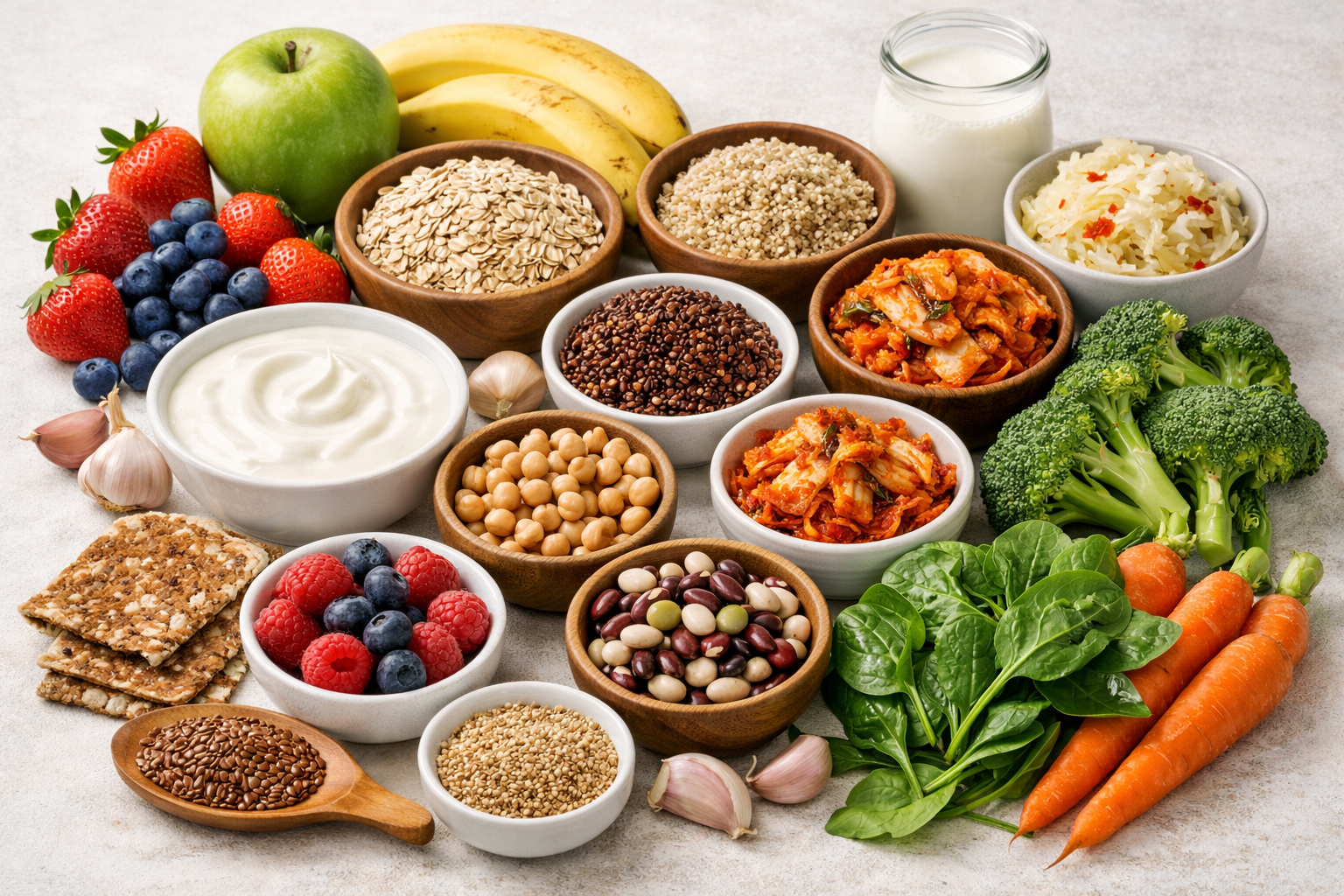
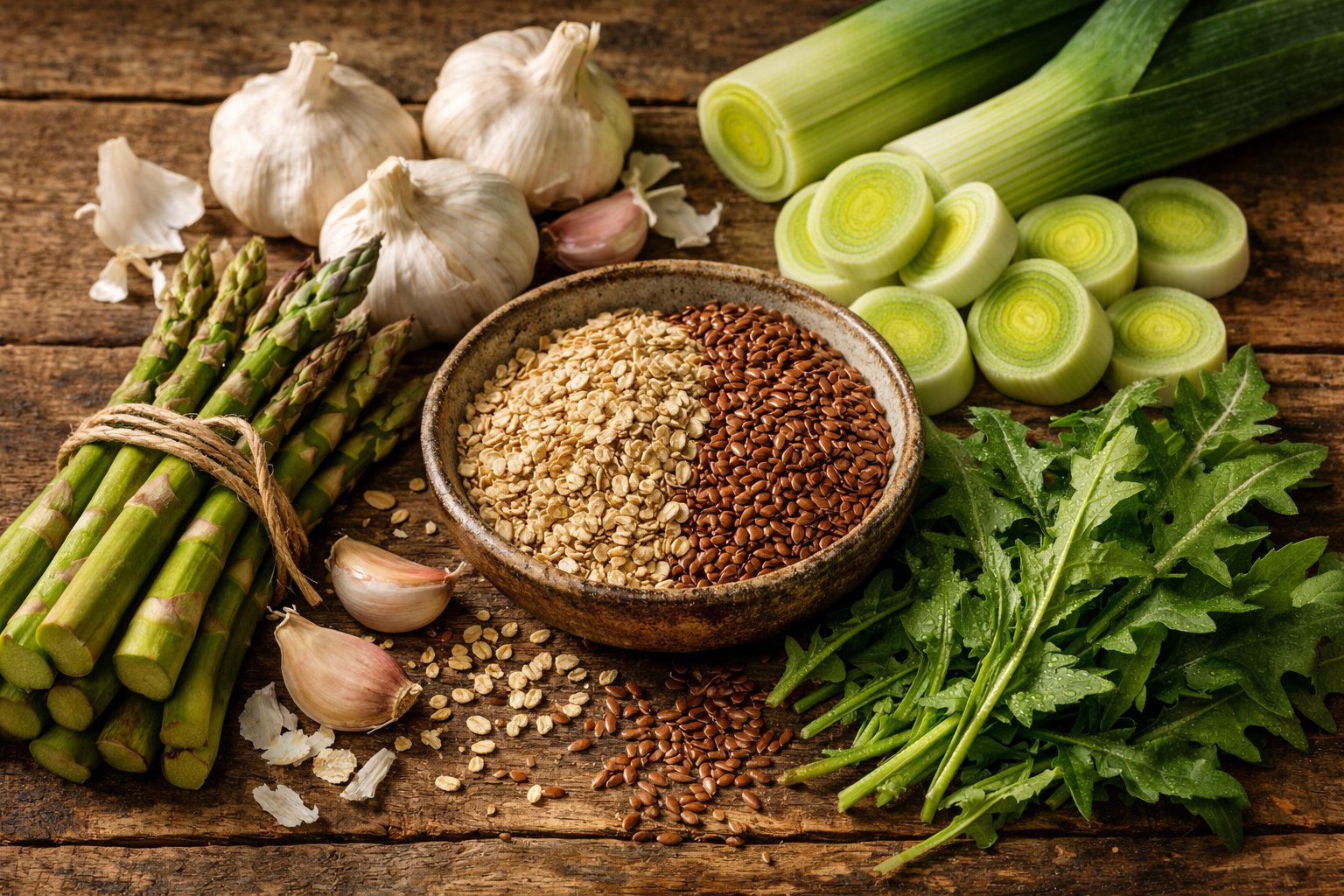
The most accessible starting points are food-first:
Start with one change, not six. Stay with it long enough to notice how it feels. Then add the next.
And whenever possible, pair gut-supportive foods with other gut-supportive foods — a bowl with vegetables, legumes, and a small serving of kimchi, for example, does more together than any of them would do alone.
A meal built around a variety of plants and some fermented food is not a dramatic intervention. It is just a good meal — one that also happens to be genuinely useful for your gut.

Starting small is not a sign that you are doing it wrong.
Often, it is the smarter way to learn what your gut actually tolerates and responds to.
This is where a lot of people find relief.
You do not need to build your entire health plan around gut barrier optimization.
The barrier matters. Supporting it matters. But it works best when the broader environment it lives in is also supported.
That broader environment includes:
That may sound less exciting than a targeted supplement protocol.
But it is usually much more helpful — and much easier to actually live with.
The gut barrier and gut inflammation deserve serious attention — and clear thinking.
They are not nonsense. They are not magic. And they are not problems you solve with one food, one supplement, or one dramatic change.
What they are is responsive. The gut lining renews itself constantly. The immune environment in your gut shifts with what you feed it, how well you sleep, and how much stress you are carrying.
That means the things you do most days — not the things you do once — are the ones that matter most.
Start with one thing. Build from there. Think in patterns, not shortcuts.
That is where the real change tends to happen.