
ANTI-INFLAMMATORY EATING FOR GUT HEALTH

A Practical Guide to Eating in a Direction Your Gut Can Work With

If you’ve already tried eating better for your gut — and you’re still not sure what’s actually helping — this guide is for you.

Not because you’ve been doing it wrong.

But because anti-inflammatory eating is often taught as a list of rules, not a system. And rules are easy to follow when life is calm. They’re much harder to hold onto when things get busy, symptoms are unpredictable, or the advice you’ve found keeps contradicting itself.

This guide takes a different approach.

It’s practical, calm, and built around real life — not a perfect week. You’ll learn what anti-inflammatory eating actually means for gut health, which choices tend to matter most, and how to build a pattern that holds up over time.

No extremes. No overhauling everything at once. Just a clearer starting point.

Quick Answers

If you want the short version first, start here.

What does “anti-inflammatory eating” actually mean?

It means choosing a pattern of foods that tends to be less irritating to the gut, steadier for blood sugar and energy, and more supportive of a calm immune response over time. It is not a strict diet or a list of banned foods. It is a direction — one you can move in gradually, without overhauling everything at once.

Why hasn’t it worked as well as I expected?

The most common reason is that food was treated as the whole solution, when digestion also responds to stress, sleep, and the pace at which changes are introduced. A second common reason is changing too many things at once — which makes it impossible to identify what’s actually helping. A food-only approach often misses half the picture.

What are the highest-return food choices to make first?

Colorful cooked vegetables, gentle fiber sources like oats and berries, and omega-3 rich fish tend to offer the most consistent benefit. Adding one or two of these consistently matters more than doing everything at once. The meal plan below is a useful place to begin.

Does anti-inflammatory eating mean I have to give things up?

Not primarily. The most useful framing is “more of this” rather than “none of that.” Reducing ultra-processed snacks, late-night heavy meals, and excess alcohol tends to help — but the goal is turning the volume down on a few patterns, not eliminating foods entirely.

How quickly will I notice a difference?

For most people, consistency over two to four weeks produces a clearer picture than any single dietary change. The gut responds to patterns more than to individual meals. Making one change at a time and staying with it long enough to notice the effect is the clearest path to useful information about your own body.

What if my gut is sensitive and new foods cause symptoms?

That is common, and it is not a sign the approach is wrong. It is usually a pacing issue. Some genuinely helpful foods — fiber, fermented foods, certain vegetables — can cause temporary discomfort when added too quickly. Starting with smaller amounts and building gradually tends to produce a steadier response. The troubleshooting section below has more on this.

Want a Simple Place to Start?

Download the free 14-Day Anti-Inflammatory Meal Plan — steady meals, gentle variety, and clear modifications for IBS, low-FODMAP diets, and sensitive digestion. Designed to work in real life, not just on a good week. No overhaul required.

What “Anti-Inflammatory” Actually Means (and What It Doesn’t)

The phrase gets used so often that it has started to mean everything and nothing at the same time.

Here’s a plain-English version:

Anti-inflammatory eating is not a strict diet. It’s a direction.

It’s a pattern of food choices that tends to be less irritating to the gut, steadier for energy and blood sugar, and more supportive of a balanced immune response over time.

The goal isn’t to eat perfectly. The goal is to eat in a direction your gut can work with consistently.

Think of it less like a rulebook and more like a compass — something that helps you make steadier choices on ordinary days, not just when you’re feeling motivated.

It also isn’t about one food, supplement, or ingredient. Turmeric is not the answer. Neither is cutting gluten or going dairy-free, unless those changes are specifically relevant to your situation. The real value of anti-inflammatory eating comes from the pattern — repeated over weeks and months, adjusted to fit your body and your life.

Why This May Have Been Harder Than It Sounds

If you’ve tried some version of anti-inflammatory eating before and still feel uncertain what’s helping, that’s not unusual — and it’s not your fault.

A few things tend to make this harder than it needs to be:

Changing too many things at once. New foods, new supplements, new restrictions, all at the same time. When symptoms change, there’s no way to know what caused it. And when nothing seems to change, it’s easy to conclude the approach isn’t working — when the real issue may be that too many variables are shifting simultaneously.

Advice designed for ideal conditions. Many anti-inflammatory plans are designed for a calm, controlled week. Real life — stress, travel, disrupted sleep, busy days — doesn’t look like that. When the plan breaks down, it’s easy to feel like you failed, when the problem was actually the plan’s fragility, not yours.

Food treated as the whole solution. Food matters deeply. But digestion also responds to stress, sleep quality, hydration, nervous system state, and the pace at which changes are introduced. Anti-inflammatory eating works best as part of a broader system, not as a standalone fix.

Starting with too much, too fast. Some genuinely helpful foods — fiber, fermented foods, certain vegetables — can cause temporary discomfort when added too quickly for a sensitive gut. The response feels like failure. But it may simply be a pacing issue, not a sign that the food is wrong for you.

If any of this sounds familiar, the goal isn’t to try harder. It’s to build a steadier, more realistic system — one you can return to even when life gets messy.
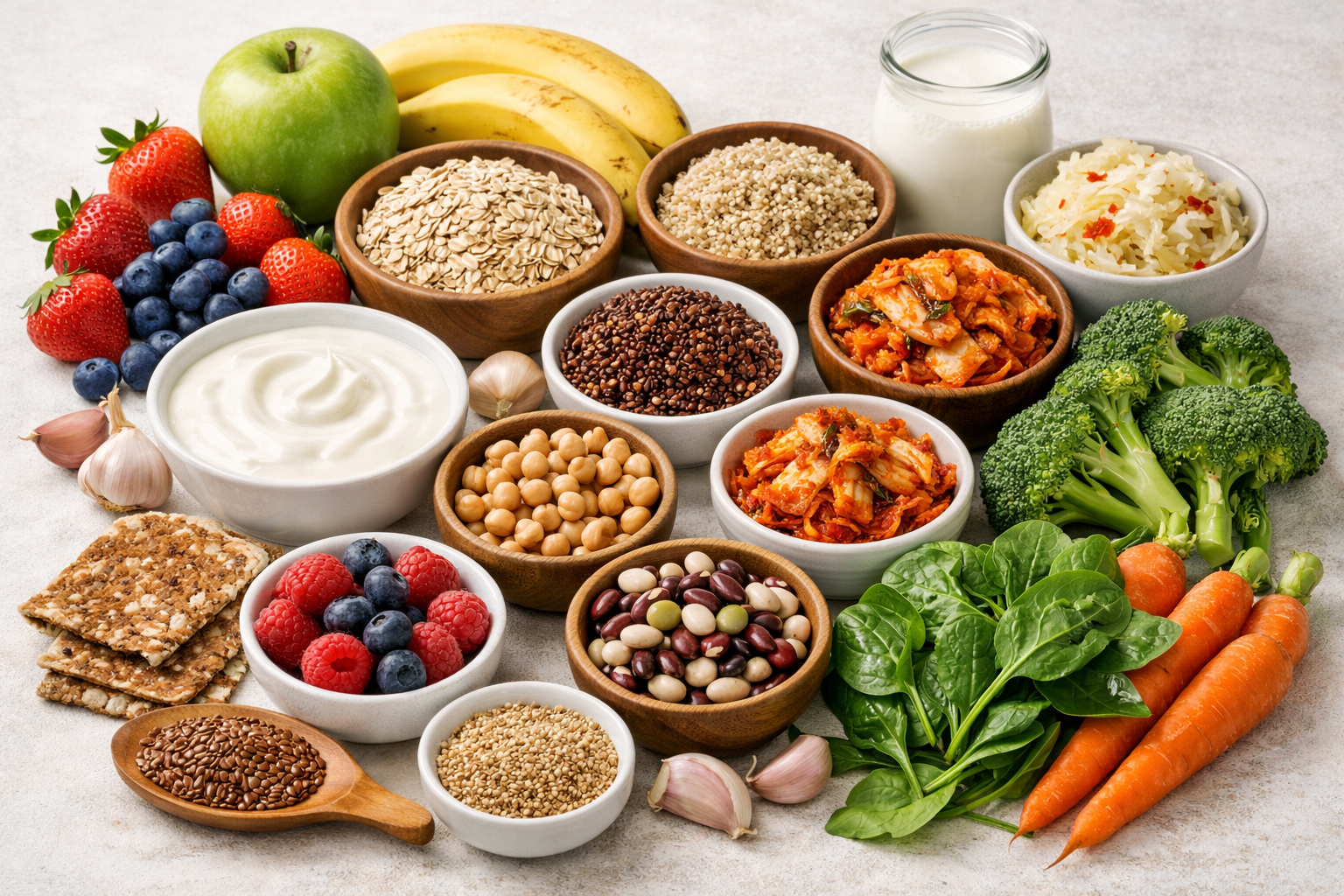
THE CALM-FIRST PRINCIPLE

Stabilize Before You Adjust

This is the step most people skip.

Start with what you already tolerate

Before adding anything new, identify two or three meals you already eat that fit the anti-inflammatory direction reasonably well. Repeat those. Get consistent with what’s already working before you add new variables. Stability first.

Change one thing at a time

The most common mistake is stacking changes: new breakfast, new supplements, new dinner rotation, all at once. Even if every change is a good one, it becomes impossible to connect the dots. One change at a time gives you real information about what’s actually helping your body.

Notice before you conclude

Give a change two to three weeks before evaluating it. The gut responds to patterns, not single meals. A few difficult days early in a dietary shift is often adjustment, not failure. What you notice over two to three weeks is far more useful than what you notice in two to three days.

A Simple Anti-Inflammatory Plate

You don’t need a new recipe every day. You need a reliable default — a meal pattern you can repeat without thinking too hard, on a Tuesday when you’re tired and short on time. Here’s a simple framework you can adapt to whatever you have on hand:

1. A steady protein

Eggs, fish, poultry, tofu or tempeh, plain yogurt or kefir if tolerated. Protein helps stabilize blood sugar, supports satiety, and gives your gut something predictable to work with.

2. A colorful plant base

Cooked vegetables are often gentler than raw when digestion is sensitive. Leafy greens, zucchini, carrots, squash, spinach — choose what you tolerate. Aim for variety over time, not all at once.

3. A supportive carbohydrate (optional but often helpful)

Oats, rice, potatoes, quinoa, or fruit. These provide fuel and — depending on the source — fiber that feeds gut microbes. Start with the ones you already know you tolerate.

4. A quality fat

Olive oil, avocado, nuts or seeds in amounts you tolerate. Fats slow digestion in a helpful way, support nutrient absorption, and tend to be calming to the gut when used in reasonable amounts.

5. Flavor that doesn’t punish you

Herbs, lemon, ginger, mild spices. Go easy on heat if it triggers symptoms. Anti-inflammatory flavoring — turmeric, cinnamon, ginger — can be added in small amounts over time.
This isn’t about perfect macros. It’s about a meal your gut can reliably handle — one you can return to when more elaborate plans have fallen apart.

What to Emphasize — The “More of This” List

If you want the highest-return changes, start here. These choices tend to support a calmer gut environment over time:

  • Colorful cooked vegetables — leafy greens, carrots, zucchini, squash, cooked cruciferous vegetables in portions your gut can handle
  • Omega-3 rich fish — salmon, sardines, trout; aim for two to three servings a week if this fits your preferences
  • Gentle fiber sources — oats, cooked vegetables, berries; fiber feeds beneficial gut microbes, though gentler starting points matter for sensitive digestion (see the troubleshooting section below)
  • Anti-inflammatory herbs and spices — turmeric, ginger, cinnamon; small amounts, used consistently
  • Fermented foods — plain yogurt, kefir, live sauerkraut in small amounts, if tolerated; a useful addition, not a requirement
  • Steady hydration — water throughout the day supports gut motility and the gut lining; dehydration is a simple and underappreciated gut stressor

What to Reduce — Without Going Extreme

Anti-inflammatory eating is often less about eliminating foods and more about turning the volume down on a few patterns that tend to stir things up:

  • Fewer ultra-processed snacks (not zero — just fewer)
  • Fewer deep-fried or heavy greasy meals, especially combined with other gut stressors
  • Fewer blood sugar spikes, especially eating high-sugar foods on an empty stomach
  • Less alcohol, which is often a meaningful gut irritant for many people
  • Fewer late-night heavy meals, which can interfere with the gut’s overnight housekeeping process

One practical observation: the “stacking” problem tends to matter more than any single food. A heavy, fried, high-sugar, alcohol-included meal does more to disrupt gut balance than any one of those things alone. Reducing the combination is often more useful than eliminating one item entirely.

That’s not a rule. It’s a pattern worth noticing.

The One-Notch Method

Small Swaps That Add Up

You don’t need an overhaul. You need a direction, and then one manageable step in it.

The one-notch method is simple: identify the single easiest swap you can make this week and repeat it until it becomes the default. Then add the next.

A few examples:

  • Soda → sparkling water or unsweetened tea
  • Chips or crackers as a default snack → a small handful of nuts, or hummus with something to dip
  • A sugary breakfast → oatmeal with fruit and a protein source
  • A heavy late dinner → a lighter meal, finished two to three hours before bed
  • Raw vegetables that cause bloating → cooked versions of the same vegetables
  • Skipping vegetables entirely → one cooked vegetable you already enjoy, added to one meal

The value isn’t in any one swap. It’s in choosing one you can repeat without effort — and repeating it until it becomes the default.

Small, consistent choices build a gut-supportive pattern over time. That pattern does more for long-term inflammation than any short-term reset.

Why One Person Notices Results and Another Doesn’t

Two people can make the same dietary changes and have noticeably different gut experiences. That does not mean one of them is doing it wrong.

Usually, the context is different.

Your response to anti-inflammatory eating is shaped by:

  • the baseline state of your gut microbiome — a more disrupted microbiome may take longer to respond
  • how long dietary patterns have been working against the gut — longer-standing patterns take more time to shift
  • whether sleep and stress are also being addressed, or whether food remains a separate variable
  • how consistently the changes are being maintained — a good week followed by a return to previous habits is less useful than a modest, steady pattern
  • your medication history, including past antibiotic use, which affects the microbiome’s baseline
  • whether there is an underlying digestive condition that may need more targeted support alongside dietary changes

Gut improvement in response to dietary change is not an overnight process. The patterns that got you here built over time, and the patterns that move you forward will too.

This is not a reason to be discouraged. It is a reason to think in patterns rather than fixes — and to give changes enough time to show what they’re actually doing.

Common Mistakes

And How to Avoid Them

Treating anti-inflammatory eating as a short-term reset

A two-week “clean eating” period followed by a return to previous habits produces limited long-term benefit. The gut responds to consistent patterns maintained over time — not to periodic interventions. The goal is a repeatable baseline, not a special-occasion event.

Focusing on individual “superfoods” rather than overall pattern

Turmeric, salmon, and blueberries are genuinely useful. But no single food transforms gut health. The research consistently points to dietary patterns — variety, consistency, and the overall mix of choices — as the relevant unit of change. Individual foods matter less than the pattern they’re part of.

Adding too much fiber too quickly

Fiber is one of the most important inputs for gut health. It feeds beneficial microbes, supports the gut lining, and helps regulate motility. But adding too much, too quickly — especially with a sensitive gut — can cause bloating and discomfort that feels like failure. Start low, build gradually, and notice how your gut responds.

Treating every symptom as a sign something is wrong

Some variation in digestion is normal, especially when dietary patterns are shifting. A difficult day or two does not mean the approach is wrong. A consistent pattern of discomfort lasting more than two to three weeks is worth paying attention to — a single rough day usually is not.

Leaving stress and sleep out of the equation

Anti-inflammatory eating works best as part of a broader system. Chronic stress and poor sleep both increase gut inflammation, disrupt the microbiome, and reduce gut barrier function through overlapping pathways. Dietary improvements sometimes plateau not because the food choices are wrong, but because sleep or stress is working against them.

Making the approach so complicated it becomes unsustainable

Tracking every ingredient, avoiding entire food categories, planning perfect meals — these tend to be unsustainable in real life. The most useful anti-inflammatory approach is one simple enough to maintain on an ordinary, imperfect week. Complexity is not the goal. Consistency is.

A Note on Troubleshooting for Sensitive Digestion

If your gut is reactive, the issue may not be the foods themselves.

It may be the pace. How quickly something was introduced. How much was added at once. Or whether stress and poor sleep are already making the gut more reactive — which changes how even helpful foods land.

If symptoms increase after making changes:

Simplify for two to three days. Return to a few simple, reliable meals. Cooked vegetables, a steady protein, a gentle carbohydrate. Let things settle.

Reduce fiber portions temporarily. Fiber is genuinely helpful for gut health, but more is not always better when the gut is already irritated. Starting lower and building gradually is often the smarter path.

Keep the timing consistent. Eating at irregular times, or skipping meals, adds stress to a system that responds better to steadiness.

Consider what else is happening. A difficult week at work, disrupted sleep, or heightened stress doesn’t just affect mood — it affects how the gut processes food. This is not a reason to give up on food changes. It’s a reason to account for the whole picture.

Symptoms are not always failure signals. Sometimes they’re information — a cue that something needs to be paced differently, not abandoned.
Who May Want to Go More Slowly

A slower, more supported approach often makes sense for:

  • people with IBS, IBD, SIBO, or other functional gut disorders, for whom specific food choices may need closer attention
  • people following a low-FODMAP protocol, for whom fiber and fermented foods may need careful introduction
  • people with significant food sensitivities or a history of disordered eating, for whom dietary changes may need professional guidance
  • people currently taking medication that affects digestion or the gut microbiome
  • people going through a period of acute stress, illness, or major life disruption
  • people who have not spoken to a healthcare provider about their digestive symptoms

Starting small is not a sign that you are doing it wrong. It is often the clearest way to learn what your body actually responds to.

And if digestive symptoms have been significant or long-standing, working with a healthcare provider — a gastroenterologist, registered dietitian, or functional medicine practitioner — is worth considering. Targeted support alongside general dietary changes tends to produce better outcomes than general changes alone.
The Bigger Takeaway

Anti-inflammatory eating is not a protocol. It is not a reset. It is not a list of foods you are allowed to eat and foods you are not.

It is a direction — a pattern of consistent choices that tends to reduce gut irritation, support microbial balance, and help the gut do its maintenance work more reliably over time.

Food matters. But food does not work alone. Sleep, stress, hydration, and the pace at which changes are introduced all shape the gut environment alongside what you eat.

What tends to help most is a pattern of consistent, modest inputs that support the whole system over time. That pattern does not require perfection. It requires enough steadiness that the gut has something reliable to work with.

Start where you can. Build from there. Think in patterns, not fixes.

That is where the real change tends to happen.

Want a Simple Place to Start?

Download the free 14-Day Anti-Inflammatory Meal Plan — two weeks of practical, gut-friendly meals with modifications for IBS, low-FODMAP diets, and sensitive digestion. Small steps, plainly laid out.

Want the Broader Gut-Health Framework?

The Gut Health Beyond Basics Course helps you build a practical, personal system for supporting your gut through food, habits, and daily rhythms — including how anti-inflammatory eating fits into the bigger picture.

Keep Reading

If you want to go deeper, these are good next reads:
What “Anti-Inflammatory” Actually Means for Your Gut (and What It Doesn’t)
The phrase is everywhere. The clear explanation is harder to find. Here’s a plain-spoken walkthrough of what anti-inflammatory eating actually does inside the gut — the mechanisms, the common misunderstandings, and why the pattern matters more than any single food.
The Best Anti-Inflammatory Foods for Gut Health (and How to Actually Eat Them)
A practical guide to the food choices that tend to offer the most consistent benefit for gut health — with realistic guidance on how to introduce them, how much tends to help, and how to adapt for a sensitive digestive system.
Why Anti-Inflammatory Eating Sometimes Stops Working — and What to Do About It
If you’ve tried eating better and still feel uncertain what’s helping, this is the post to read. A clear look at the most common reasons dietary changes plateau — and the adjustments, both food-related and lifestyle-related, that tend to move things forward.
How to Build an Anti-Inflammatory Meal Pattern That Works in Real Life
A step-by-step guide to building a gut-supportive eating pattern that holds up when life gets busy — including the default meal framework, the one-notch method, and how to troubleshoot when the gut responds unpredictably.