There’s a good chance you’ve been here before.
You read an article about the relationship between prebiotics and fiber and gut health, decided to eat more of them, and added a handful of new foods to your week. Then, you spent the next few days feeling significantly more bloated and uncomfortable than when you started.
So, you quietly dialed it back. Maybe you wrote off the whole category entirely.
If that happened, it wasn’t a sign that fiber doesn’t work for your body. It was simply a sign that you moved too fast. The secret to long-term success isn’t giving up; it’s learning how to increase fiber without bloating by matching your pace to your biology.
What Prebiotics Actually Are (And Why They Matter)
Before diving into the strategy, it helps to clear up the definitions. “Prebiotic” is one of those wellness buzzwords that gets thrown around a lot without much practical explanation.
Simply put, prebiotics are a specialized type of dietary fiber that your body cannot fully digest. They pass through your stomach and small intestine mostly intact, arriving in your large intestine where your resident fiber and gut bacteria interact.
In plain terms: Prebiotics are food for your gut bacteria. They aren’t the live bacteria themselves (those are probiotics)—they are the fuel that helps the beneficial microbes you already have survive, colonize, and do their job.
When your microbes feed on these fibers, they ferment them. This fermentation process produces crucial secondary compounds—such as short-chain fatty acids (like butyrate)—that actively support your gut lining, regulate local inflammation, and contribute to more predictable digestion.
The Best Prebiotic Foods to Look For
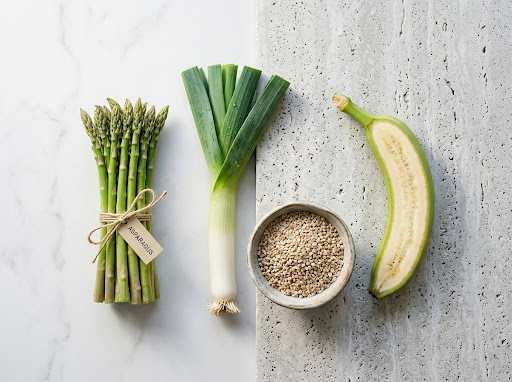
You don’t need an exotic supplement protocol to feed your microbiome. A practical prebiotic foods list consists of everyday staples you can find at any local grocery store:
- Onions, garlic, and leeks
- Asparagus
- Bananas (especially slightly underripe ones)
- Oats and barley
- Beans, chickpeas, and lentils
- Chicory root
Why Fiber and Gut Bacteria Cause Initial Bloating
Here is the vital piece of information most standard fiber advice completely skips over: your gut bacteria are reactive.
When you suddenly and significantly increase your daily fiber intake, your microbiome responds to the sudden influx of fuel. Because the bacteria have more to work with, they rapidly become highly active. The natural byproduct of this microbial activity is gas. When your digestive tract isn’t accustomed to managing that volume of gas, it results in localized pressure, cramping, and visible bloating.
This is a normal, healthy biological response. It is not a sign that your gut is “rejecting” the fiber; it is visual proof that your gut bacteria are doing exactly what they are supposed to do.
The underlying issue isn’t the fiber itself. The problem is the pace.
Most people try to overhaul their diet overnight, introducing multiple high-fiber foods simultaneously. Because your microbial populations haven’t had the time to adapt and shift balance to handle the new digestive load, the sudden transition triggers distress.
How to Add Fiber Gradually: The “Low and Slow” Protocol
“Start low and go slow” is a common phrase in the digestive health space, but it’s rarely paired with an actual tactical blueprint. To implement a safe, bloat-free transition, follow these four practical guidelines:
1. Introduce One New Source at a Time
Avoid the temptation to add three new high-fiber vegetables and a synthetic fiber supplement in the same week. Introduce exactly one new food from the best prebiotic foods list, eating it consistently for a full seven days before adding a second variable. This isolated approach gives your microbiome a controlled window to adapt.
2. Prioritize Cooked Over Raw
Raw, high-fiber vegetables require significantly more mechanical and microbial breakdown than cooked ones. In the early stages of rebuilding your gut foundation, opt for cooked onions, leeks, or asparagus. Cooking breaks down some of the tougher carbohydrate structures beforehand, reducing the intensity of sudden internal fermentation.
3. Track Your Personal Response Baseline
Microbiome diversity is highly individualized. You might tolerate legumes perfectly well but experience an immediate response to raw garlic, or find oats incredibly gentle while onions cause minor friction. Track these subtle patterns. They are not reasons to permanently eliminate a food, but rather indicators of where you need to scale back your portions and advance more gradually.
4. Extend Your Timeline
True biological adaptation takes time. A realistic window to assess how a specific prebiotic food settles in your system is two to four weeks of consistent, modest intake. A few uncomfortable days during week one do not accurately reflect how that same food will make you feel a month down the road once your microflora settle into a stable balance.
The Most Forgiving Prebiotic Foods for Beginners
If you are unsure where to safely start your kitchen adjustments, these four choices represent the most reliable, low-pressure entry points for an untuned digestive system:
- Oats: One of the most gentle and universally tolerated prebiotic sources available. A standard serving of oatmeal a few times a week adds consistent, soluble fiber with minimal risk of an aggressive gas response.
- Slightly Underripe Bananas: Bananas that still have a hint of green on the peel are exceptionally rich in resistant starch. From a gut health perspective, resistant starch acts exactly like a prebiotic fiber, bypasses early digestion, and is generally highly tolerated without triggering intense gas.
- Cooked Aromatics: Sautéed or roasted onions, garlic, and leeks offer exceptional prebiotic value while being significantly easier on your intestinal tract than raw preparations.
- Measured Legumes: Beans and lentils are world-class prebiotic fuels, but they are also the most common culprits behind initial bloating if overconsumed. Instead of eating a full bowl, start by mixing just two tablespoons of thoroughly rinsed lentils into a soup or salad, slowly raising the amount over several weeks.
What You Are Building Toward
The temporary bloating that accompanies a dietary shift is not permanent. For the vast majority of individuals, the system stabilizes completely over a few weeks as your microbial ecosystem achieves a new equilibrium.
What you are left with is a highly diverse, properly nourished, and stable gut environment. Over time, this compounding stability translates directly into regular bowel movements, predictable digestion, and a gut lining that is far more resilient to external stressors.
Furthermore, once this prebiotic foundation is firmly established, your system becomes significantly more receptive to other targeted interventions—including probiotics.
Optimizing your fiber routine isn’t flashy, and it doesn’t carry the fast appeal of a synthetic quick-fix pill. However, when it comes to shifting the actual baseline of your long-term cellular health, consistent whole-food prebiotics remain the most reliable tool available. The objective is never to shock your system with a sudden dietary overhaul. The goal is to introduce subtle, consistent fuel sources and give your body the exact space it needs to adapt.
A Simple Tool to Help You Shop
If you want a straightforward reference guide to ensure you are selecting the most efficient, easily integrated prebiotic ingredients at the store, I created a comprehensive, free resource asset for you.
You can access the Free Prebiotic Shopping List here to download your copy. It outlines the best everyday sources categorized clearly, requiring no complex kitchen preparation.
In our next discussion, we will demystify the world of fermented foods—exploring what they actually do inside your body, how they fundamentally differ from traditional probiotic supplements, and how to begin introducing them to your kitchen without unnecessary complexity.
Talk soon,
— Reid Ashford
reidashford.com